How Smoke and Heat Detectors Work in Commercial Fire Alarm Systems
Walk into almost any commercial building and you will find devices on the ceiling or high on the wall that most people barely notice until one of them goes off. Yet those small devices sit at the front edge of the entire life safety strategy. In a commercial fire alarm system, smoke and heat detectors are often the first components to recognize that something has gone wrong. What happens after that recognition, and how well the rest of the system responds, can decide whether a problem stays small or turns into a serious emergency.
On jobsites and during service calls, one thing becomes clear fast. Owners often think of detectors as stand-alone devices, but they are really part of a chain. The detector senses a condition. The fire alarm panel interprets it. Notification appliances warn occupants. Monitoring, when required, pushes the signal to the right place. In some buildings, that chain also interacts with sprinkler and suppression equipment. If any link is neglected, the system may still look complete on paper while performing poorly in the field.
That is especially important in places like Denver and across Colorado, where weather, occupancy type, and local code enforcement all shape how systems are designed and maintained. Denver adopts the International Code Council family of codes with local amendments, and those amendments matter. Base model code assumptions are not always the whole story. The local authority having jurisdiction, often the fire marshal or building official, may have project-specific requirements for devices, monitoring, permits, and testing. Anyone planning upgrades, tenant improvements, or a new build should confirm the local path early, not after equipment is already selected.
The job detectors are really doing
A https://frontrangeemergencyplanning411.rivetgarden.com/posts/fire-watch-basics-for-denver-metro-properties-during-fire-protection-system-outages commercial fire alarm system is not trying to prove beyond doubt that a fire exists. It is trying to identify dangerous conditions quickly enough to trigger the right response. That sounds subtle, but it matters. Smoke detectors and heat detectors do not "see" fire the way a person sees flames. They react to conditions associated with fire.
Smoke detectors are intended to sense products of combustion that move through the air. Heat detectors are intended to react when heat conditions reach their designed response criteria. The practical difference is timing and environment. Smoke tends to offer earlier warning in many spaces because combustion products can spread before temperatures rise enough to activate a heat detector. Heat detection can be useful where smoke detection would struggle because of normal airborne contaminants, humidity, dust, or cooking vapors.
The detector itself is only the first step. Once it changes state, it sends that information to the fire alarm control panel. The panel then determines what action should follow based on programming, zoning, and system design. In a straightforward case, that may mean initiating an alarm sequence, activating horns or speakers, and transmitting a signal to an approved monitoring point. In a more complex building, the panel may also be tied into smoke control functions, emergency communications, or releasing interfaces for suppression systems, depending on what the building requires.
That is why the phrase fire alarm detectors and panels Denver is not just a search term people use online. It captures a real design reality. Detectors do not protect a building by themselves. The panel is the logic center, and its programming, condition, and testing are just as important as the devices hanging in the field.
Smoke detection, early warning, and the reality of airflow
Smoke detection works best when people respect the building as it actually operates, not as it looked on a drawing set months earlier. Air movement changes everything. Supply diffusers, return grilles, warehouse ceiling heights, open office reconfigurations, and tenant build-outs all affect how combustion products travel. A detector placed in the wrong spot may still be installed neatly and pass a casual visual check while offering poor real-world performance.
In many office, retail, healthcare, education, and mixed-use occupancies, smoke detection plays a critical role because it can provide warning before heat becomes extreme. That gives occupants more time to move, gives staff more time to investigate if the system design allows that process, and helps emergency response start sooner.
But early warning comes with a trade-off. Smoke detectors are generally more sensitive to environmental conditions than heat detectors. Dust from construction, aerosol products, steam, and poor housekeeping can all create trouble. Anyone who has managed a remodel in an occupied commercial space has probably seen the pattern. A contractor sands drywall without proper containment, a detector near the work area gets contaminated, and now the owner is dealing with nuisance alarms, service calls, and upset tenants.
This is one reason Denver pays close attention to recurring unintentional alarms. Local code amendments address problematic fire alarm systems and repeated false alarms, including repair or replacement when unintentional false alarms repeat, and reimbursement for some false alarm responses. That local angle should change how owners think about maintenance. Fire alarm false alarms Denver is not just an annoyance issue. It can become a compliance and cost issue.
Heat detection, where it shines, and where it does not
Heat detectors have a different role. They are useful where normal building activity makes smoke detection less reliable, or where smoke detection is not the best fit for the hazard and environment. Heat is often a practical choice in utility spaces, mechanical areas, or certain service environments, though final design still depends on code requirements and the authority having jurisdiction.
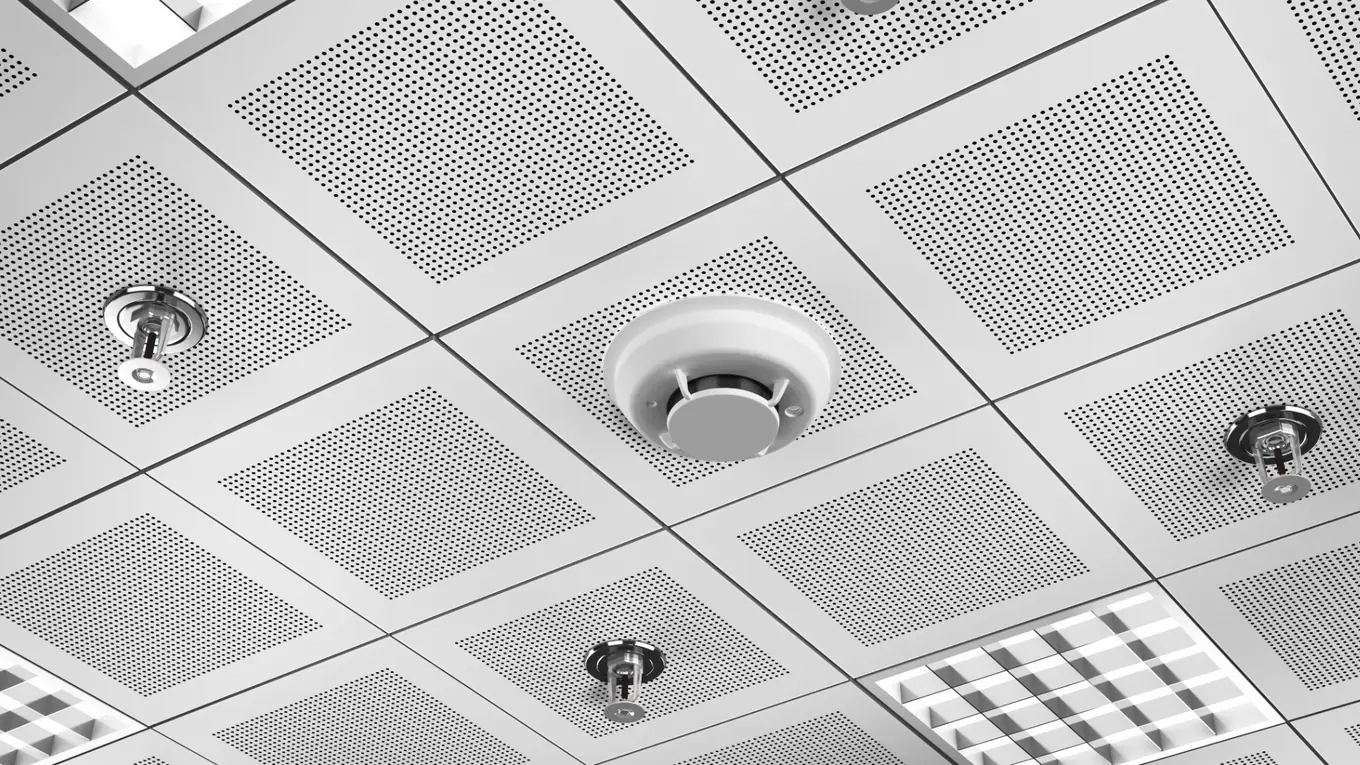
The strength of heat detection is also its limitation. It reacts later in many fire scenarios than smoke detection does. That does not make it inferior. It makes it different. In a commercial fire alarm strategy, later response may be acceptable or even preferable in some areas if the environment would cause smoke devices to trip unnecessarily. The point is not to choose one technology as "better" in the abstract. The point is to match the device to the space, the occupancy, and the fire protection objective.
A kitchen provides an easy example. Commercial kitchen fire suppression Denver projects often involve more than simple smoke detection because grease-laden vapors and routine cooking activity can make ordinary detection choices problematic. Cooking operations often require specialized suppression approaches, and the alarm interface has to support the broader protection scheme. In these settings, getting detection wrong can either produce endless nuisance alarms or leave genuine hazards poorly covered.
What the control panel does after a detector activates
Owners sometimes focus on visible devices because they are easy to count. The panel deserves equal attention because it decides what the system does with detector information. NFPA 72 covers fire alarm and signaling system design, inspection, testing, and maintenance, and that scope includes monitoring and emergency communications functions. That matters because a detector signal is only useful if the system handles it correctly.
When a detector activates, the panel receives the signal, processes it under its programming logic, and initiates whatever outputs are required for that building. Those outputs may include occupant notification, supervisory actions, trouble reporting, signal transmission to a central station or another approved continuously staffed monitoring point, or interaction with other fire protection systems. Denver code requires some fire alarm or emergency communication devices to transmit to a central station, commercial monitoring service, or continuously staffed monitoring service, depending on the application.
That monitoring piece often gets overlooked until a building changes hands or a permit review raises questions. Fire alarm monitoring Aurora CO, or in any nearby jurisdiction, is not a generic plug-and-play feature that should be assumed identical from one building to the next. Monitoring expectations can vary by the system application and local enforcement. It is worth confirming the exact requirement rather than relying on what was acceptable at another property.
How detectors interact with sprinkler and suppression systems
Commercial fire protection works best when people stop thinking in silos. Detectors, sprinkler systems, and special suppression systems often overlap in purpose while serving different functions. A sprinkler system is designed to discharge water when heat opens sprinklers. That means sprinkler operation is tied to thermal conditions at the sprinkler itself, not necessarily to smoke detector activation elsewhere in the room. Maintenance and testing findings frequently show that owners confuse these roles.
The distinction matters in real buildings. A smoke detector may initiate an alarm before any sprinkler operates. A sprinkler may operate in a fire condition even if smoke migration is delayed or detector placement is less than ideal. Special suppression systems can add another layer. Clean agent fire suppression Colorado applications, for example, protect spaces where water discharge may be undesirable for the contents or operation. In those environments, detector performance and system coordination are especially important because the releasing and notification sequence must work as intended.
Cold climate design creates another layer of complexity. In Colorado, wet pipe sprinkler systems are not always practical in spaces subject to freezing. That is where a dry pipe sprinkler system Colorado project or a pre action sprinkler system Denver design may enter the conversation. Owners sometimes assume the alarm contractor and sprinkler contractor can sort that out late in the job. In practice, these systems work better when coordination starts early. A preaction system, by its nature, relies on interface logic between detection and sprinkler controls. Dry systems and other forms of sprinkler freeze protection Colorado planning also affect inspection and maintenance routines over time.
Even though this article centers on smoke and heat detection, the broader point is simple. Detection does not sit in isolation. Device choice can influence sprinkler release strategy, notification design, monitoring requirements, and service planning.
Why placement and environment matter more than most people expect
Field conditions are often the difference between a dependable system and a problem child. A detector can be technically listed, properly wired, and fully compatible with the panel, yet still underperform because the space around it changed.
I have seen detector issues traced back to things that looked minor during construction. A new soffit redirected airflow. A door that was supposed to stay closed was held open all day by staff. A warehouse racking plan changed after final inspection and altered how heat and smoke would collect under the roof. None of that means the original design team was careless. Buildings are living spaces. They evolve.

This is one reason routine fire safety inspection Lakewood CO style site reviews, or similar inspections in any jurisdiction, are valuable beyond mere paperwork. A good inspection looks at actual conditions, not just labels and dates. If a space now stores materials differently, if contamination is visible, or if occupancy has changed, those facts should feed back into maintenance and perhaps redesign decisions.
Testing is where theory meets reality
A commercial fire alarm system can look perfect in submittals and still fail the practical test if maintenance slips. NFPA 72 fire alarm testing Denver schedules should be treated as operational necessities, not as administrative chores. Testing confirms that detectors still communicate with the panel, that signals transmit properly, and that system functions happen in the sequence intended.
The same principle applies to sprinkler systems. NFPA 25 is the main standard for inspection, testing, and maintenance of water-based fire protection systems, including sprinklers, and it sets minimum frequencies for many tasks. Those tasks can fall monthly, quarterly, semiannually, annually, and on longer multi-year intervals, so a sensible service calendar matters. Fire sprinkler inspection frequency Colorado planning should reflect those minimum frequencies as well as any local requirements and site conditions.
This is where experienced facility teams save themselves trouble. Instead of treating each system separately, they build one coordinated inspection calendar that covers alarm, sprinkler, suppression, and monitoring obligations. That reduces missed dates and helps catch cross-system issues sooner. For example, a trouble on the alarm side may affect a releasing feature. A sprinkler impairment may require temporary operational changes elsewhere. When vendors and building staff work from disconnected schedules, those relationships are easier to miss.
False alarms are not harmless
There is a bad habit in some facilities of shrugging off nuisance alarms as part of doing business. That mindset usually gets expensive. Repeated false alarms disrupt occupants, interrupt operations, strain confidence in the system, and trigger service costs. In Denver, they can also draw attention under local code provisions aimed at repeated unintentional alarms and problematic systems.
The hard part is that false alarms often come from ordinary, preventable causes rather than dramatic equipment failure. Dust contamination after tenant work, detectors installed too close to routine environmental sources, deferred cleaning, aging devices, and poor coordination with mechanical changes all show up again and again. The panel may be doing exactly what it was designed to do. It is the field condition that has drifted away from the original design assumptions.
A practical response usually starts with honest diagnosis. Replacing detectors blindly can waste money if the actual problem is airflow or environmental contamination. On the other hand, hanging onto old or problematic devices too long can create a cycle of callbacks. Denver's local approach to repeated false alarms gives owners one more reason to take root-cause analysis seriously.
A few judgment calls that separate decent systems from dependable ones
There is no single formula that fits every commercial building, but several patterns show up often enough to be worth remembering.
-
Early coordination beats late correction. If a project may involve clean agent release, kitchen suppression, a preaction arrangement, or special monitoring rules, discuss those interactions before equipment is locked in.
-
Device selection should follow the environment. Smoke detection may offer earlier warning, but that does not mean it belongs everywhere. Heat detection has a place when the surrounding conditions make smoke sensing unreliable.
-
Maintenance planning should match real code intervals. NFPA 25 inspection Colorado scheduling and NFPA 72 testing routines are not annual checkboxes only. They involve different frequencies for different tasks.
-
Local code amendments matter. Denver requirements can differ from the base model codes, and repeated false alarm problems can trigger more than frustration.
-
Field changes should trigger system review. A renovated suite, new tenant use, altered airflow, or changes in storage can all affect detector performance.
Those are not theoretical lessons. They usually come from projects where someone assumed the system would keep working no matter how much the space changed around it.
Certification, inspection, and the local authority
Owners and property managers often ask when they need some form of sign-off or formal review. The honest answer is that permitting, inspection, and acceptance obligations depend on the work being done and the local authority's requirements. Denver and other Colorado jurisdictions may require permits and inspections for regulated fire safety work, and some hazardous materials related activities involve authority review as well. That is why fire system certification Denver conversations should begin with the actual scope of work and the applicable authority's expectations, not with assumptions based on a different municipality or a prior project.
A local fire marshal or other authority having jurisdiction may interpret amendments, review shop drawings, inspect installations, or require proof that systems operate correctly before approval. This is especially important on projects that involve emergency communication features, monitored alarm transmission, suppression releasing interfaces, or occupancy changes.
The best project teams I have watched handle this well do not treat the authority as an obstacle. They bring questions early, document decisions carefully, and avoid guessing when local rules are unclear. That approach usually saves time.
What building owners should pay attention to year after year
Once a commercial building is occupied, the work shifts from installation to stewardship. Good stewardship is not glamorous. It looks like records, schedules, and follow-through. It means asking whether the detectors still match the current use of the space. It means making sure alarm monitoring remains in place where required. It means understanding whether sprinkler inspection frequency Colorado obligations have been met and whether any deficiencies have been corrected, not just noted.
It also means recognizing when a recurring small issue is warning you about a bigger one. A detector that trips repeatedly near a loading area may be signaling a poor device choice, a change in air movement, or a maintenance lapse. A trouble signal that keeps returning may indicate that the panel side of the system needs deeper attention. These issues rarely improve on their own.
For larger facilities, especially campuses or multi-tenant properties, central coordination helps. One person or team should know the status of fire alarm testing, sprinkler inspection, suppression service, monitoring contracts, and open deficiencies. When nobody owns the full picture, devices get missed, reports get filed away unread, and small defects linger until an inspection or actual event exposes them.
The system only works as a system
Smoke and heat detectors are simple to overlook because they are so common. Yet in commercial fire alarm systems, they carry the first burden of detection. They sense conditions associated with fire, send that information to the panel, and set larger protective actions in motion. Their effectiveness depends on proper selection, careful placement, sound panel programming, required monitoring, and disciplined testing.
That last part deserves emphasis. No commercial owner should assume that a quiet system is a healthy system. Quiet can mean dependable operation, or it can mean hidden trouble that has not been challenged yet. Regular NFPA 72 fire alarm testing Denver practices, coordinated with NFPA 25 inspection Colorado planning for water-based systems, is what turns that uncertainty into confidence.
When the building is in Denver, Aurora, Lakewood, or elsewhere in Colorado, local requirements should shape the details. Denver's code amendments, monitoring expectations, and false alarm provisions are reminders that national standards and local enforcement work together, not separately. The most reliable systems come from respecting both.