Fire Protection Record Keeping for Denver Facilities: Organizing Test Reports, Certifications, and Corrections
If you manage a commercial, institutional, or multi-tenant property in Denver, fire protection paperwork has a way of spreading everywhere. A sprinkler report lives in someone’s inbox. A fire alarm test is scanned to a desktop folder called “misc.” A correction notice gets handled quickly in the field, then disappears into a truck console or a project manager’s backpack. Months later, during a fire safety inspection, everyone knows the work was done, but no one can put a clean record set on the table.
That is usually when record keeping stops feeling administrative and starts feeling operational.
In Denver, fire code enforcement and inspections run through the city’s fire authorities, including the Fire Marshal and the Denver Fire Department Fire Prevention Division. The city’s inspection materials make it clear that inspectors may review test records for fire safety systems along with exits, emergency lighting, fire-resistive separations, and fire lanes. Commercial and institutional properties are typically inspected about every 12 months. If issues are found, violations can lead to an order notice for correction. In other words, your documentation is not a side task. It is part of how you show that systems were tested, deficiencies were identified, and corrections were actually completed.
For facilities teams, the real challenge is not knowing that records matter. It is keeping the right records in a form that can be found quickly, understood by the next person, and matched to the exact system in the building.
The paperwork that matters most is usually tied to a code clock
A lot of record chaos starts because different systems run on different schedules and different standards. Fire alarm documentation follows one path. Water-based fire protection follows another. Permitting and acceptance paperwork adds a third layer.
NFPA 72 is the national code for fire alarm and signaling systems, including design, installation, inspection, testing, maintenance, and emergency communications systems. NFPA 25 covers the inspection, testing, and maintenance of water-based fire protection systems. Even if a facility manager never opens those standards personally, their vendors, inspectors, and service reports are working from them. That means your files should be organized in a way that reflects those categories, not in a generic folder called “fire stuff.”
This becomes especially important in Denver because the city’s process for fire protection work includes plan review and requires acceptance or approval before final sign-off of fire alarm and fire protection permits. On the suppression side, Colorado law is also clear that installation, modification, alteration, or repair generally cannot begin until required permits are obtained, the job has been registered, and working plans and hydraulic calculations have been reviewed and approved.
Those are not abstract legal points. They tell you exactly which documents need to stay together. If a system was newly installed or materially changed, the permanent record should not begin with the final test report. It should begin with the permit path and the approved basis for the work.
Why facilities get tripped up during inspections
Most problems are not dramatic. They are small mismatches that pile up.
A building may have a recent fire pump inspection Denver contractor report on file, but no one can show whether the noted issue was corrected. A tenant improvement may include fire sprinkler installation Denver work, but the approved plans and final acceptance paperwork are stored with the construction manager, not the property owner. A site may have current fire alarm monitoring Denver service, but the records available on-site only show monitoring invoices, not actual inspection and testing reports.
Inspectors tend to look for continuity. They want to see that the building’s life safety systems are being maintained, that deficiencies are tracked, and that corrections are closed out. If the story is fragmented, even a well-maintained building can look disorganized.
That is why I usually tell facility teams to think less about “filing paperwork” and more about building a traceable history. Every major system should tell the same simple story from one year to the next: what exists, what was tested, what failed, what was repaired, and what was approved.
Start with the building, not the vendor
One of the most common mistakes in commercial fire protection Colorado record keeping is filing by contractor name. It feels logical at first. One vendor handles sprinkler work, another handles extinguishers, another handles monitoring. The problem comes when you change providers. Suddenly the building history is split across three service companies and two former employees.
A better system starts with the property itself, then breaks records into system categories. That way, if you replace a contractor, the file structure stays intact.
The categories that usually make the most sense are straightforward:
- fire alarm and monitoring
- sprinkler and other water-based systems
- fire pumps and backflow devices
- fire extinguishers
- permits, plan review, acceptance, and correction notices
That is enough structure for most facilities without making the archive cumbersome. A small office property may not have every category. A hospital, campus, or high-rise may need subfolders under each one. The key is consistency. If every annual fire safety inspections Denver visit triggers a quick internal record check, you want anyone on the team to know exactly where to look.
Permits and acceptance paperwork deserve their own home
Routine inspection reports are only part of the record picture. The documents that usually save the most time later are the ones people forget to preserve after a project closes.
Denver requires permits for most construction, alteration, or repair work on private property. The city’s process also includes fire protection engineering review, and final sign-off on fire alarm and fire protection permits depends on acceptance or approval. If your building had a significant system change, those permit and acceptance records should be treated as permanent building records.
This matters because a future inspector, engineer, buyer, insurer, or new facilities manager may need to answer very practical questions. Was this riser added under permit? Were the plans reviewed? Was the alarm panel replacement accepted? Which code set applied to that work? Did the tenant improvement modify the suppression layout in the kitchen, lab, or storage area?
Denver has also adopted new 2025 building and fire codes effective December 31, 2025, with some projects allowed to use either the 2025 or 2022 code set depending on when the submittal was made. During any transition like that, records become more important, not less. If a project entered under one code path while another project in the same building followed a later code set, your archived files need enough context to explain that difference. Otherwise, a future reviewer may assume something is missing when in fact the timing drove the requirement.
The most useful record is often the correction log
Test reports alone do not tell the whole story. In practice, the file that gives building owners the clearest control is the correction log.
A correction log is simply a running internal record of deficiencies, who owns the fix, when service was scheduled, when the work was completed, and where the backup documentation lives. It does not need to be fancy. A spreadsheet works. A well-managed work order platform fire systems for Colorado businesses works too. What matters is that it bridges the gap between inspection findings and final proof.
This is where many Denver facilities can tighten up their process. The city’s annual inspection materials note that violations can trigger an order notice for correction. If your team receives one, you do not want the only evidence of the response living in scattered email threads. The correction log should point to the original notice, the vendor report, the repair invoice if applicable, and the follow-up test or sign-off that closed the issue.
The reason this works so well is simple. Fire protection records are often generated by different parties for different reasons. A fire extinguisher inspections Denver tag tells part of the story. A service ticket tells another part. A reinspection or follow-up note may tell the last part. Without a unifying log, staff have to reconstruct events from memory. That is fragile, especially when personnel turn over.
What to keep together after every service visit
When a vendor completes work, I like to see one complete packet for that visit, even if the packet is digital. Too many buildings keep only the headline document and lose the context.
A strong visit packet usually includes the service report, any noted deficiencies, any immediate corrections completed that same day, and communication about next steps if the system was not restored to full compliance during the visit. If the work involved a permitted change, then the related permit and approval documents should connect back to that packet as well, even if they live in a separate permanent project file.
That level of organization pays off across every discipline. It helps with fire suppression systems Denver service, with backflow inspection Denver reporting, with emergency fire protection Denver calls after a trouble condition, and with annual or periodic system testing. More importantly, it helps the owner answer a basic question without guessing: “What exactly happened last time this system was touched?”
Digital files are better, but only if someone can find them in under a minute
Most facilities have already moved away from wall binders and banker boxes. That is a good thing. Digital records are easier to duplicate, protect, and share. Still, many digital archives are basically unsearchable.
The fix is not expensive software. The fix is naming discipline.
A report called “scan0037.pdf” is almost useless. A report called “2026-04-18 Bldg-AFire-Alarm Annual-TestReport” can be found instantly. Add version control when revisions occur. Keep a simple naming convention and insist that every vendor submission gets renamed before it is archived. It takes a few extra seconds on the day the report arrives and saves hours later.
For multi-building portfolios, put the site name first. For campus environments, include the building identifier. For phased construction, include the project name. If there are multiple risers, panels, or special suppression zones, note that in the file name or parent folder. You are not trying to make the archive elegant. You are trying to make it obvious.
The on-site set still matters
Even with excellent digital storage, some records should be quickly accessible on-site. That does not mean maintaining a full paper archive in the control room. It means making sure staff can produce essential records during a visit or emergency without waiting on a remote administrator.
That is especially true where disabled life safety systems or active deficiencies are involved. Denver’s fire authorities inspect hazards and disabled systems, and special inspections may happen outside normal business hours when needed. If a key person is away and all the context lives only in that person’s email, the building is exposed.
At minimum, site staff should know where to access the current status of the building’s fire alarm, sprinkler, pump, extinguisher, and related correction records. Whether that is a secure cloud folder, a facility management platform, or a dedicated local directory matters less than whether the access process actually works when tested.
New construction, tenant improvements, and the danger of handoff gaps
A surprising amount of missing documentation traces back to project closeout. Construction teams focus hard on getting systems through final testing, but once the space is turned over, records often scatter. The electrical contractor keeps one set, the sprinkler contractor keeps another, and the owner receives only a compressed closeout package with missing details.
In Denver, that is risky because the city’s process involves review, permits, and acceptance before final sign-off. If a future issue comes up, you want complete continuity from approved design through final acceptance. This is especially true for spaces with specialized hazards or suppression arrangements, though the principle applies to ordinary tenant improvements too.
If you oversee buildouts regularly, it helps to use a closeout standard. Require the project team to hand over the approved permit documentation, final acceptance or approval records, and the initial testing package in one organized set before retention is released or the project is considered administratively complete. That may sound strict, but it prevents years of confusion later.
Annual inspection season goes smoother when you audit your files first
Because Denver commonly inspects commercial and institutional properties on about a 12-month cycle, a short annual documentation audit can save a lot of scrambling. It does not need to become a major event. One disciplined review before your likely inspection window is usually enough.
A practical pre-inspection file review should answer a few basic questions:
- Do we have the latest test and inspection reports for each active system?
- Are all open deficiencies either corrected or clearly documented as in progress?
- Can we show proof of correction for past notices or vendor findings?
- Are recent permit, plan review, and acceptance records filed for any system changes?
- Can on-site staff access the records quickly during an inspection?
That check tends to reveal the same weak spots every year. A report never made it from the service technician to the shared drive. A backflow inspection Denver report is present, but the correction paperwork is missing. A fire system certification Colorado document exists, but no one labeled it in a way that links it to the right project. These are small fixes when found early.
Don’t confuse monitoring, testing, and certification
This is a frequent source of misunderstanding, especially in mixed-use properties where responsibilities are split between ownership and tenants.
Monitoring is not the same as testing. A current fire alarm monitoring Denver account does not replace inspection and test documentation. A certificate or approval tied to a project does not replace recurring maintenance records. A passed annual service visit does not erase a separate deficiency that is still waiting on parts or scheduling.
Good record keeping respects those distinctions. If your building has alarm monitoring, keep those service records with the fire alarm file, but do not let them crowd out the test history. If a contractor provides fire system certification Colorado paperwork after a project milestone, preserve it with the permanent project record and link it to ongoing maintenance files. If there is an emergency repair call, file it where the recurring system history lives, not in a general maintenance bucket where no one will ever look again.
Work with your vendors, but do not outsource ownership of the record
Reliable service partners are essential in fire protection Denver work. Still, the building owner or operator needs to own the master record. Vendors change platforms, merge, retire accounts, or rotate staff. When that happens, “they probably have a copy” is not a record strategy.
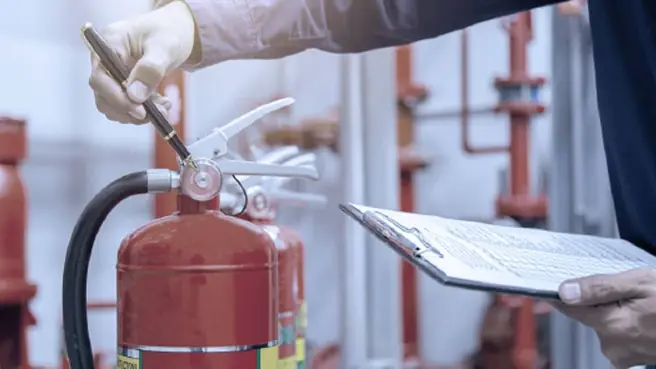
The best provider relationships make document flow explicit. Ask where reports will be sent, how quickly they will be delivered, whether deficiency language is standardized, and how corrected items will be documented. If your property receives emergency fire protection Denver service after hours, decide in advance who will capture that paperwork and where it goes the next business day. If a contractor performs fire safety inspections Denver support or testing tied to a city process, make sure the acceptance outcome gets archived with the system history.
This is not about distrust. It is about control. Your building’s compliance story should remain intact even if every service contract changes next year.
A clean archive reduces friction for everyone
When records are organized, inspections go smoother. Service providers spend less time retracing old issues. Facilities staff stop chasing the same paperwork over and over. Project closeout gets cleaner. Ownership has better visibility into recurring deficiencies and deferred repairs.
Just as important, a good archive sharpens decision-making. If the same valve issue appears in multiple NFPA compliance inspections Colorado reports over several years, that pattern may point to a broader replacement need rather than another isolated service call. If repeated fire extinguisher inspections Denver reports show accessibility problems in the same tenant area, that tells you the issue is operational, not mechanical. If acceptance records for prior upgrades are easy to find, future plan review becomes less painful.
That is really the payoff. Record keeping is not just about proving what happened in the past. It gives you a clearer picture of what the building needs next.
For Denver facilities, the smartest approach is also the simplest. Keep records by building and system. Preserve permit and acceptance documents with the same care as test reports. Track deficiencies through correction, not just discovery. Make files easy to search, easy to access, and easy to understand a year later. If you do that consistently, the next inspection feels a lot less like an audit of your memory and a lot more like a straightforward review of a well-run property.
Pre Action Fire, Inc
2921 W 38th Ave, Denver, CO 80211, United States
Phone: (303) 682-0113
Website: https://preactionfire.com